Nature's Contradiction: Wild Swimming's Microplastic Problem Flows Beneath the Surface
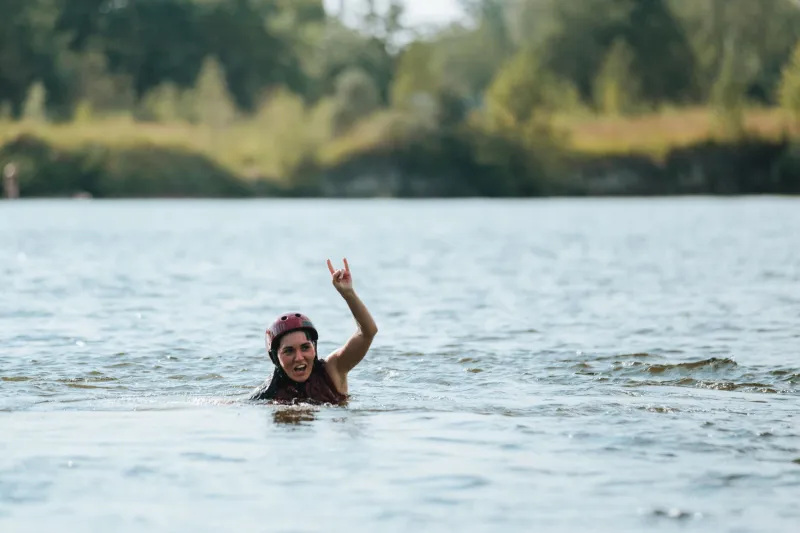
Nature's Contradiction: Wild Swimming's Microplastic Problem Flows Beneath the Surface
There is a particular kind of early morning scene that has become iconic in contemporary Britain: a group of swimmers gathered at a riverbank or reservoir edge, dry robes pulled tight against the autumn chill, speaking with quiet conviction about the restorative power of cold water immersion. Wild swimming has transcended its origins as an eccentric pursuit of the hardened outdoors enthusiast and become a mainstream cultural movement, one that carries with it a powerful implicit environmental message. To swim in a river is, the movement suggests, to stand in solidarity with it.
The solidarity, it turns out, is more complicated than it appears.
The Fibre Problem Nobody Is Discussing
The scientific evidence on synthetic textile fibre shedding has accumulated steadily over the past decade. Research published in peer-reviewed journals including Environmental Science & Technology and Nature has established that synthetic fabrics — nylon, polyester, elastane — shed microscopic fibres during both use and washing, fibres that pass through wastewater treatment systems and accumulate in aquatic environments. A single wash of a polyester garment can release hundreds of thousands of individual fibres. The figures for immersion in moving water, while less extensively studied, suggest shedding rates that are comparable or higher.
The wild swimming community's gear of choice is, almost without exception, constructed from synthetic materials. Neoprene wetsuits — the dominant choice for year-round swimmers in British conditions — are made from polychloroprene, a synthetic rubber that sheds particles during use. Dry robes, popularised in the UK primarily by the brand Dryrobe and subsequently by Orca, Osprey, and a range of imitators, are constructed from polyester fleece and nylon outer shells. Technical swimwear from brands including Speedo, Zoggs, and Huub uses elastane-polyester blends that are demonstrably efficient at shedding microfibres into aquatic environments.
When a wild swimmer enters the River Wye in a neoprene wetsuit and a polyester swim cap, they are introducing synthetic materials directly into the very ecosystem they have come to experience. The irony is structural, not incidental, and the gear industry has been conspicuously reluctant to address it.
 Photo: River Wye, via c8.alamy.com
The Brands and Their Silence
Dryrobe is perhaps the most culturally prominent brand in Britain's wild swimming community. Its products are ubiquitous at lidos, river swimming spots, and coastal bathing locations across the country, and the brand has cultivated a strong association with outdoor wellness culture and environmental consciousness. Dryrobe's website references its commitment to sustainability and features content celebrating Britain's natural waterways. It does not publish fibre-shedding data for its products. It does not disclose the microplastic release rates associated with its fleece-lined robes during use or washing. It has not, to the knowledge of this publication, committed to a timeline for transitioning to materials with demonstrably lower shedding profiles.
Dryrobe is not alone in this silence. Speedo, which dominates the technical swimwear market in the United Kingdom, publishes extensive documentation on its sustainability credentials — including commitments to recycled material content — but does not disclose fibre-shedding performance data for its competitive or recreational swimwear ranges. Zoggs, Huub, and Zone3, which collectively supply a significant proportion of Britain's open-water swimming community, have similarly declined to publish shedding metrics despite the availability of standardised testing methodologies developed by organisations including the Microfibre Consortium.
The Microfibre Consortium, a UK-based industry body working to develop standardised fibre-shedding testing and reduction targets, has made meaningful progress in engaging the broader textile industry. Its membership includes several major apparel brands. It does not, at the time of writing, count any of the leading wild swimming gear brands among its signatories.
The Community's Uncomfortable Position
The wild swimming community deserves credit for the genuine environmental advocacy it has conducted on issues including river water quality, sewage discharge, and agricultural runoff. Organisations such as Outdoor Swimmer Magazine, the Outdoor Swimming Society, and Swim Wild have all campaigned vigorously against the pollution of Britain's waterways by water companies and industrial operators. That advocacy is legitimate and important.
However, a movement that campaigns against United Utilities releasing untreated sewage into the River Mersey while remaining silent about the synthetic fibres shed by its own members' Dryrobe fleeces occupies an intellectually inconsistent position. Environmental accountability cannot be applied selectively without undermining its own credibility.
 Photo: River Mersey, via a.cdn-hotels.com
This is not an argument for abandoning wild swimming, nor for dismissing the genuine environmental commitments of many within the community. It is an argument for honesty — the same honesty that the movement demands of water companies, agricultural operators, and government regulators.
What Accountability Would Look Like
The path towards genuine accountability in this sector begins with data disclosure. Gear brands operating in the wild swimming and open-water swimming market should be required — or, in the interim, strongly pressured — to publish standardised fibre-shedding data for all products, tested against the methodologies developed by the Microfibre Consortium. Consumers cannot make informed material choices in the absence of this information.
Beyond disclosure, the industry should be investing in alternative materials. Yulex, a natural rubber derived from guayule plants, offers a neoprene alternative with a substantially lower environmental profile and no synthetic fibre shedding. Several wetsuit manufacturers — including Patagonia and Picture Organic — have adopted Yulex-based constructions. British wild swimming brands have been slow to follow, citing cost and supply chain constraints that, while real, reflect commercial priorities rather than insurmountable technical barriers.
For dry robes and changing accessories, wool and recycled natural fibre alternatives exist and are commercially viable. The price premium associated with these materials is real but modest, and it would diminish at scale. The argument that sustainable materials are prohibitively expensive is one that the industry has deployed for long enough without sufficient challenge.
Swimming Towards Consistency
Britain's wild swimming movement has achieved something genuinely valuable: it has reconnected hundreds of thousands of people with the country's rivers, lakes, and coastlines in a way that generates real affection and real motivation to protect those environments. That connection is worth preserving and building upon.
Preserving it, however, requires the movement to extend its environmental principles inward — to examine not only the external threats to the waters it loves, but the contribution its own practices and equipment choices make to those threats. The synthetic fibres released by a community of passionate, well-intentioned swimmers accumulate in the same ecosystems that community is fighting to protect. That is a contradiction that demands resolution, not avoidance.
The gear brands supplying Britain's wild swimmers hold significant responsibility here. They have profited handsomely from the movement's growth. It is time they invested proportionately in the material science and transparency that genuine environmental stewardship requires.