Rooted in Contradiction: The Plastic Crisis Flourishing Inside Britain's Houseplant Boom
Rooted in Contradiction: The Plastic Crisis Flourishing Inside Britain's Houseplant Boom
The British houseplant revival has been one of the more charming retail stories of the past decade. What began as a niche enthusiasm — the preserve of dedicated horticulturalists and the occasional student flat — has matured into a mainstream cultural phenomenon worth an estimated £1.3 billion annually. Garden centres report year-round queues at their indoor plant sections. Supermarkets dedicate expanding floor space to tropical foliage. Social media platforms overflow with interiors content in which lush greenery functions simultaneously as décor, identity, and moral statement.
That moral dimension is not incidental. For a significant proportion of Britain's plant-buying public, the purchase of a houseplant is partly an environmental act — a small, domestic gesture towards the natural world in an era of ecological anxiety. The irony, then, is considerable. Because the infrastructure through which the overwhelming majority of Britain's houseplants are sold is built on a foundation of single-use plastic that the industry has been remarkably slow to dismantle.
The Pot at the Bottom of the Problem
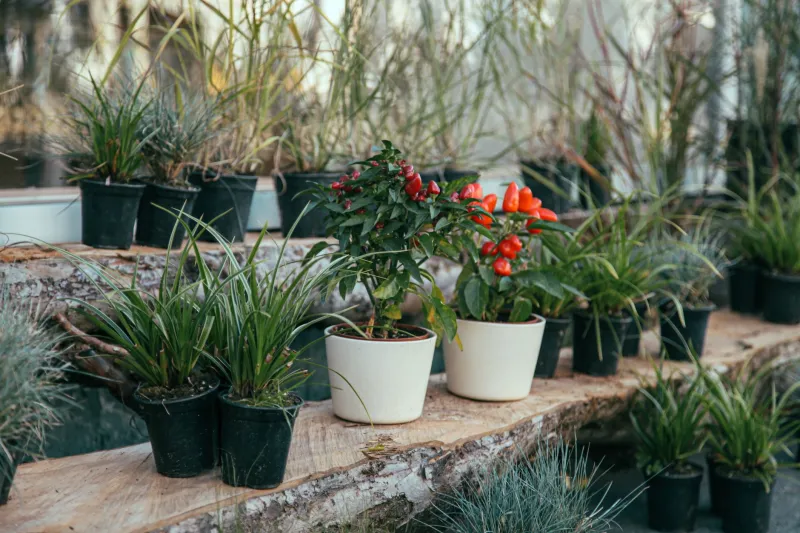
The plastic plant pot is so ubiquitous as to have become almost invisible. The thin-walled, injection-moulded polypropylene or polyethylene containers in which virtually every commercially sold houseplant arrives are, in the majority of cases, not accepted by kerbside recycling collections. Their dark pigmentation — standard in the industry because it provides an aesthetically neutral backdrop that allows the plant itself to draw the eye — renders them invisible to the optical sorting technology used at most UK recycling facilities.
This is not a new problem. The horticultural industry has been aware of the dark plastic pot issue for well over a decade. The RECOUP (Recycling of Used Plastics Limited) organisation has published guidance on the matter. Various retailers have announced pilot schemes and transition timelines. And yet, walk into any garden centre, supermarket, or independent plant shop in Britain today and the dark plastic pot remains the default, the norm, the unremarked standard.
The Horticultural Trades Association estimates that the UK produces in the region of five hundred million plastic plant pots and trays annually. A substantial proportion of these are destined for landfill or incineration. For an industry whose entire commercial identity rests on the proposition of living, growing, natural things, this is a reputational liability of the first order — and an environmental failure that demands more than pilot schemes.
Layers of the Problem: Sleeves, Trays, and Transit Packaging
The plastic pot is merely the most visible component of a broader packaging problem. Many houseplants — particularly those sold through supermarkets and mass-market retailers — arrive wrapped in printed polypropylene or PVC sleeves. These decorative coverings serve a primarily aesthetic function, transforming an ordinary terracotta-coloured pot into a branded product. They are almost universally non-recyclable and typically removed and discarded by the consumer within minutes of purchase.
At the wholesale and logistics level, the picture is similarly troubling. Plants are transported from nurseries — the majority of which are located in the Netherlands, which supplies an estimated eighty per cent of the UK's houseplant market — in polystyrene trays designed to cushion roots and regulate temperature during transit. These trays, once they reach British distribution centres and retail stockrooms, frequently enter general waste streams. Polystyrene recycling infrastructure in the UK is limited and inconsistently available; the material is bulky, low in residual value, and expensive to process.
The cumulative plastic footprint of a single houseplant purchase — pot, sleeve, transit tray, and any supplementary packaging — can easily exceed the weight of the plant itself. This is a figure that no retailer currently discloses on the point-of-sale information that increasingly prominent 'care guides' and 'eco-credentials' labels have begun to occupy.
The Wellness Contradiction
The cultural positioning of houseplants as a wellness product intensifies the ethical stakes of this conversation. Marketing materials across the sector — from Marks & Spencer's plant ranges to the carefully curated Instagram presences of independent urban plant shops — consistently deploy the language of nature, calm, and environmental connection. Plants are presented as antidotes to the synthetic, the artificial, and the disposable.
This framing creates a specific form of consumer deception that Plastic Promises considers particularly egregious: the use of environmental aspiration as a commercial hook whilst simultaneously embedding environmental harm in the supply chain. The consumer who purchases a peace lily because they believe it represents a small act of ecological good faith is entitled to know that the pot it arrives in will, in all probability, spend the next four hundred years in a landfill site.
Independent retailers are not immune from this critique, though the dynamics differ. Many small, independent plant shops have made genuine efforts to introduce sustainable alternatives — terracotta pots, biodegradable coir containers, and pot return schemes — and deserve recognition for doing so. However, these operators represent a small fraction of total market volume. The supermarkets and national garden centre chains that dominate the sector by transaction volume have, as a collective, moved with insufficient urgency.
What the Industry Must Do
The solutions are neither novel nor technically inaccessible. Light-coloured polypropylene pots — which can be sorted by existing optical recycling infrastructure — are commercially available and competitively priced. Several European producers have already transitioned their standard ranges. Biodegradable alternatives, including pots manufactured from coir, rice husks, and bamboo fibre, have reached sufficient commercial maturity to be deployed at scale. Pot return and reuse schemes, analogous to the milk bottle deposit systems that once defined British retail, are entirely feasible for garden centres with established customer relationships.
Retailers should be required — through procurement policy if not yet through regulation — to disclose the recyclability status of all plant packaging at the point of sale. The forthcoming extended producer responsibility regulations, which will place greater financial obligations on businesses for the end-of-life management of the packaging they place on the market, represent an opportunity to accelerate this transition. The horticultural sector should not wait for the letter of the law to catch up with the spirit of its own marketing.
Tending to Accountability
Britain's love affair with houseplants is, at its root, a benign and even admirable cultural tendency. The desire to introduce living things into domestic spaces, to nurture growth, and to maintain some relationship with the natural world in an increasingly urbanised society is something worth encouraging. The problem is not the plants. The problem is the industry that has built a lucrative business on the aesthetics of nature whilst treating environmental responsibility as an optional extra.
The houseplant boom will continue. Demand shows no sign of retreating. The question is whether that demand will continue to be met through supply chains that contradict everything the product ostensibly represents, or whether the industry will finally do what the most elementary reading of its own values demands: eliminate the unnecessary plastic, disclose what remains, and hold itself to the standard its customers believe they are already supporting.
The plant on your windowsill deserves better roots than a pot heading for landfill. So does the planet it was supposed to celebrate.