Roots of Contradiction: The Plastic Irrigation Crisis Quietly Poisoning Britain's Self-Sufficiency Movement
Roots of Contradiction: The Plastic Irrigation Crisis Quietly Poisoning Britain's Self-Sufficiency Movement
The allotment has become one of the defining cultural symbols of contemporary Britain. Waiting lists stretching to a decade in some London boroughs, a surge in smallholder licences following the pandemic, and a publishing industry devoted to the pleasures of growing your own — all attest to a nation increasingly enchanted by the idea of producing clean, honest food from the ground beneath its feet. The movement speaks in the language of connection: to soil, to season, to a slower and more considered way of living.
It is a compelling narrative. It is also, in one significant respect, a narrative built upon a plastic foundation that the movement has been conspicuously reluctant to examine.
The Infrastructure Nobody Photographs
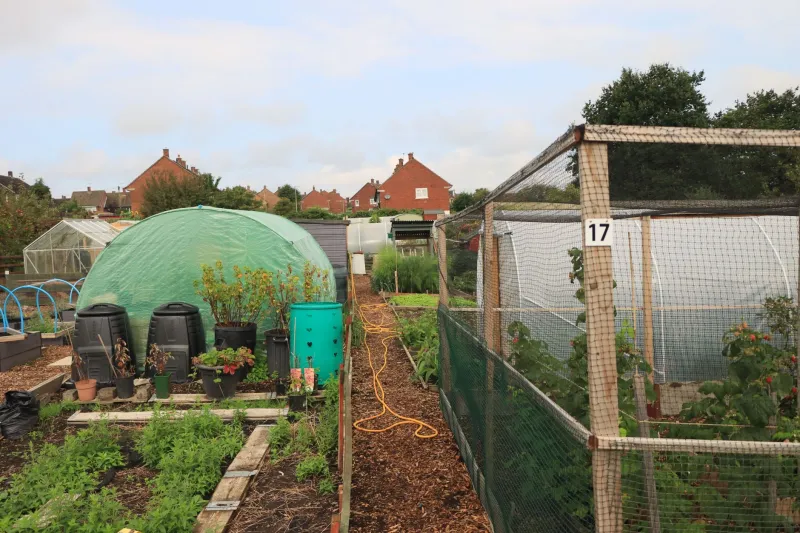
The images that populate gardening books, social media feeds, and allotment society newsletters share a common aesthetic: weathered timber raised beds, terracotta pots, heirloom seed packets arranged with artful care. What these images rarely capture is the infrastructure that actually makes productive growing possible at scale — the black polythene irrigation pipes snaking between beds, the rolls of single-use mulch film suppressing weeds across vegetable plots, and the polytunnel coverings that extend the growing season for thousands of smallholders across Britain.
Each of these materials is, in the overwhelming majority of cases, manufactured from virgin or recycled plastic. Each has a finite operational lifespan. And each, at the end of that lifespan, presents a disposal challenge that the self-sufficiency movement has largely failed to address in any systematic way.
Polythene mulch film — the flat sheeting laid across beds to retain moisture, suppress weeds, and warm the soil — typically lasts between one and three growing seasons before degradation renders it ineffective. At that point, contaminated with soil, plant matter, and in many cases residual pesticide or fertiliser residue, it is rarely accepted by conventional recycling facilities. The vast majority is consigned to general waste or, in rural areas, burned or buried on site — both practices that carry their own environmental consequences.
Microplastics and the Myth of the Clean Plot
The degradation of plastic materials in agricultural and horticultural settings is not merely a waste management inconvenience. It is an active and ongoing source of microplastic contamination in the soils that growers celebrate as their most precious resource.
Research published by the Centre for Ecology and Hydrology and subsequent studies conducted across European agricultural systems have documented the accumulation of microplastic particles in soils subject to repeated application of plastic mulch films and the use of plastic-based irrigation infrastructure. The particles — fragments smaller than five millimetres, and in many cases far smaller still — alter soil structure, affect the behaviour of earthworms and other soil organisms, and create pathways through which synthetic compounds enter the food chain.
 Photo: Centre for Ecology and Hydrology, via www.certuss.com
For a movement premised on the production of food free from the chemical and industrial inputs of conventional agriculture, this represents a profound contradiction. The smallholder who rejects synthetic pesticides and artificial fertilisers in favour of compost and companion planting may nonetheless be introducing microplastic contamination into their soil at every irrigation cycle, through the very pipes and fittings they consider merely practical tools.
The Polytunnel Question
Perhaps no element of the self-sufficiency toolkit better illustrates the tension between aspiration and material reality than the polytunnel. Across Britain — from Scottish crofts to Devon smallholdings to suburban market gardens in the East Midlands — polythene tunnel structures have become near-universal features of serious food growing operations. They extend the productive season, protect crops from the worst of the British climate, and dramatically increase yield from a given area of land.
The polythene covering a standard domestic polytunnel has a typical lifespan of five to ten years, depending on UV exposure and maintenance. When it fails, the replacement process generates a substantial volume of plastic waste — often several hundred kilograms for a structure of modest commercial scale — that is both bulky and, outside of specialist agricultural plastic recycling schemes, effectively unrecyclable through standard channels.
Agricultural plastic recycling infrastructure in the United Kingdom remains fragmented and geographically inconsistent. Schemes operated by organisations such as WRAP and facilitated through some local authorities and agricultural merchants exist in certain regions, but coverage is far from universal. Many growers, faced with the practical challenge of transporting degraded polytunnel coverings to a distant collection point, default to general waste disposal — or, in some cases, to the kind of informal burning and burial that characterises the least visible end of the agricultural plastic waste problem.
The Movement's Blind Spot
It would be neither fair nor accurate to characterise Britain's self-sufficiency movement as indifferent to environmental responsibility. The values that motivate most smallholders and allotment growers — a concern for ecological health, a desire to reduce dependence on industrialised food systems, a commitment to chemical-free production — are genuine and admirable. The problem is not one of motivation but of attention: a collective focus on what goes into the soil that has not been matched by equivalent scrutiny of what the infrastructure surrounding that soil is doing to it.
Growing organisations, including the Royal Horticultural Society, the National Allotment Society, and a range of smaller regional bodies, have begun to address sustainable growing practices in their guidance materials. Advice on composting, water conservation, and organic pest management is readily available and widely followed. Guidance on the responsible sourcing and disposal of plastic growing infrastructure — irrigation systems, mulch films, polytunnel coverings — is considerably less prominent.
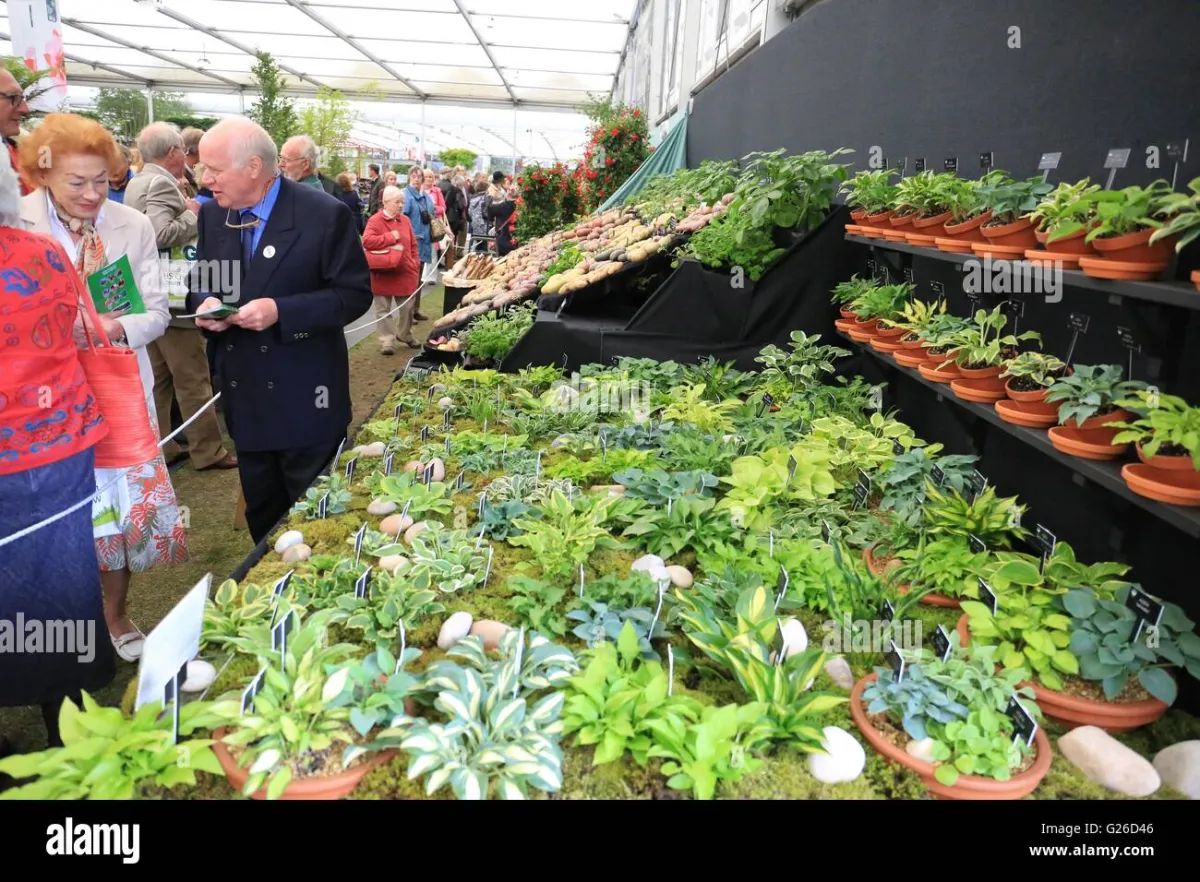 Photo: Royal Horticultural Society, via c8.alamy.com
Towards a More Honest Conversation
A number of suppliers operating within the UK horticultural market have begun to develop alternatives to conventional plastic growing infrastructure. Biodegradable mulch films manufactured from plant-based polymers, drip irrigation systems designed for extended reuse, and polytunnel coverings with improved UV resistance and established end-of-life recycling pathways are all commercially available, if not yet widely adopted.
The transition to these alternatives will require both individual commitment and structural support. Growers operating on tight budgets — allotment holders paying modest annual plot fees, smallholders working at the margins of commercial viability — cannot be expected to absorb the full cost of switching to premium sustainable infrastructure without broader incentives. Grant schemes, subsidised collection points for agricultural plastic waste, and clearer labelling of growing materials to indicate their recyclability would all contribute to a more enabling environment.
The self-sufficiency movement has built its identity on a promise of integrity — a commitment to growing food in ways that respect both human health and ecological balance. Honouring that promise in full requires the courage to examine the plastic threads running through its own infrastructure, and to begin, root by root, pulling them out.