Exposed: The Overlooked Plastic Footprint Developing Quietly Inside Britain's Photography Boom
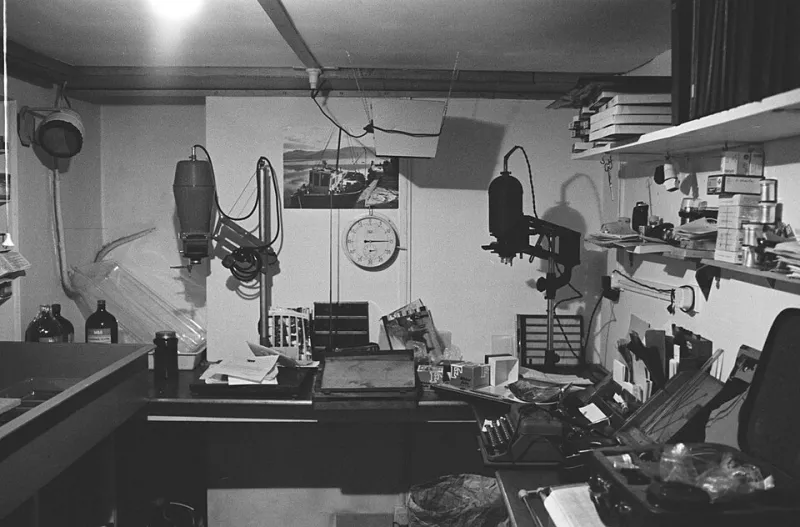
Photo: Geoff Charles, CC BY-SA 4.0, via Wikimedia Commons
Exposed: The Overlooked Plastic Footprint Developing Quietly Inside Britain's Photography Boom
Photography has rarely enjoyed greater cultural currency in Britain. The proliferation of camera clubs, the extraordinary growth of photography education, and — most intriguingly — the passionate revival of analogue film have combined to create a sector that is simultaneously nostalgic and thoroughly contemporary. Walk through any major British city and you will encounter photography studios occupying repurposed industrial spaces, independent camera shops enjoying a renaissance after years of decline, and darkrooms operating within arts centres and community hubs.
What you will not encounter is any serious environmental accounting for what all of this activity consumes and discards. The photography sector has, thus far, developed its ecological footprint in the dark.
The Packaging Accumulation Nobody Notices
Begin with the most mundane dimension of the problem: the packaging in which photographic equipment is sold and distributed. Camera bodies, lenses, tripods, lighting equipment, and accessories arrive encased in layers of protective packaging that typically combines cardboard outer boxes with substantial quantities of plastic foam, polystyrene inserts, plastic film wrapping, and cable ties. The electronics sector more broadly has come under pressure to reduce packaging waste, with some manufacturers making credible progress. The photographic equipment market has largely escaped this pressure.
For the amateur photographer investing in their first interchangeable lens camera — a market that grew significantly in Britain during and after the pandemic — the unboxing experience generates a surprisingly substantial volume of mixed-material waste. Polystyrene mouldings, in particular, remain stubbornly common in photographic equipment packaging despite being among the most problematic materials in the waste stream. Kerbside collection schemes in most British local authorities do not accept polystyrene, meaning it typically travels directly to landfill.
The secondary market in photographic equipment — driven by platforms including MPB, a Brighton-based used camera marketplace that has achieved considerable scale — does offer a partial mitigation. Extending the useful life of equipment reduces the frequency with which new packaging enters the waste stream. However, even the resale market generates its own packaging consumption when items are shipped to buyers.
Film Photography's Inconvenient Ecological Truth
The revival of film photography is, culturally, a genuinely interesting phenomenon. Younger photographers in particular have embraced 35mm and medium format film as a deliberate counterpoint to the frictionless disposability of digital image-making. There is something admirable about the commitment to a slower, more considered photographic practice that film demands.
However, the environmental narrative that has attached itself to this revival — the implicit suggestion that analogue photography is somehow more authentic and therefore more sustainable than its digital counterpart — does not withstand examination.
Film photography is a chemically and materially intensive practice. Each roll of 35mm film is housed in a plastic canister. The film base itself is made from cellulose triacetate or polyester — the latter being a form of plastic. Developing chemicals, including developer, stop bath, and fixer solutions, are supplied in plastic bottles. The photographic paper used for printing is resin-coated, meaning it incorporates a polyethylene layer that renders it non-recyclable through conventional paper streams. Spent developing chemicals, if improperly disposed of — and domestic disposal guidance in Britain is inconsistently communicated — can pose risks to water systems.
The single-use disposable camera, which has returned to popularity with remarkable speed among younger consumers and at events including weddings and parties, concentrates these problems into their most acute form. A disposable camera is, by definition, a plastic product designed to be used once. The outer casing, the film canister, and the battery it contains are all waste materials generated by a single use. At scale — and disposable cameras are now selling in volumes not seen since the early 2000s — the environmental arithmetic is troubling.
Retailers including Boots and various independent camera shops have expanded their disposable camera ranges significantly in response to demand. Very few have implemented meaningful take-back schemes to ensure that spent cameras are processed responsibly.
Studios, Schools, and the Infrastructure of Waste
Professional photography studios generate a distinct category of plastic consumption that is seldom discussed. Backdrop systems, lighting modifiers, equipment storage cases, and prop collections all involve substantial quantities of plastic materials. The fast-paced commercial photography sector — serving advertising, fashion, and product photography clients — operates under significant time pressure, which frequently militates against the careful material stewardship that sustainability requires.
Single-use elements are common in commercial studio practice. Protective coverings for floors and surfaces, disposable gloves used during equipment handling, and the packaging of consumable items including gels, tapes, and adhesives all contribute to a waste stream that is rarely quantified.
Photography education adds a further dimension. The growth of photography courses at further education colleges and universities across Britain has expanded the number of darkrooms in operation, each of which requires regular supplies of chemical consumables delivered in plastic containers. Photography schools and college departments contacted by Plastic Promises were largely unable to provide data on their annual plastic consumption from photographic consumables, nor on their disposal practices for spent chemicals and their associated packaging.
The Digital Paradox
It would be tempting to suggest that the solution lies in a wholesale embrace of digital photography, which eliminates film canisters, developing chemicals, and resin-coated paper from the equation. The reality is more complex. Digital photographic equipment contains plastics throughout its construction — in bodies, in lens barrels, in camera bags and cases. Memory cards are plastic. Hard drives and storage media used for archiving digital images are encased in plastic. The global supply chains that manufacture digital cameras are themselves environmentally intensive.
The question is not which form of photography is definitively less harmful — that calculation is genuinely complicated — but rather whether the photography sector as a whole is engaging seriously with its environmental impact. The evidence suggests it is not.
Developing a More Responsible Industry
The photography community in Britain is, in many respects, well-positioned to engage with these questions. It is a community with strong traditions of craftsmanship, attention to material quality, and pride in process. These values are not incompatible with environmental responsibility — indeed, they ought to be its natural allies.
Camera retailers should prioritise equipment from manufacturers who have made credible commitments to reducing plastic in packaging and product construction, and should implement take-back schemes for disposable cameras and used equipment. Photography schools and colleges should audit their darkroom chemical procurement and establish clear protocols for the disposal of spent chemicals and their plastic containers. The disposable camera market specifically warrants attention from regulators, given that it represents a deliberate return to single-use design philosophy at precisely the moment when policy is moving in the opposite direction.
The film photography revival need not be abandoned — but it should be pursued with open eyes. Romanticising an analogue process without acknowledging its material costs is a form of selective nostalgia that Britain's environmental moment cannot afford. The darkroom has always been a place where things are brought into the light. It is past time the industry's plastic footprint received the same treatment.