Britain's Miniature Spirits Crisis: How Tiny Bottles Create Massive Environmental Damage
The Small Problem With a Big Impact
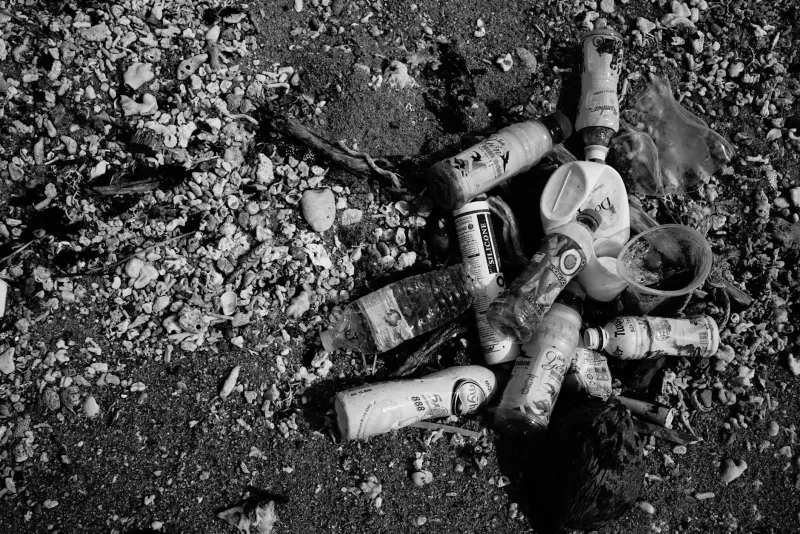
Scattered across Britain's countryside, wedged between railway sleepers, and littering festival campsites, miniature spirits bottles represent one of the most insidious yet overlooked environmental challenges facing the UK today. These 5cl vessels, dismissed as harmless novelties, collectively generate millions of tonnes of waste annually whilst receiving virtually no regulatory attention or corporate accountability.
The miniature spirits market has exploded across Britain, driven by airline partnerships, corporate gifting, and the subscription box phenomenon. What appears as innocent convenience actually represents a calculated profit strategy that externalises environmental costs onto communities and councils already struggling with waste management infrastructure.
Aviation's Liquid Legacy
Britain's airports serve as ground zero for miniature spirits consumption, with WHSmith and Boots duty-free sections promoting "travel-sized" alcohol as essential holiday accessories. British Airways alone distributes over 12 million miniature bottles annually across its fleet, creating a waste stream that follows passengers from Heathrow to destinations worldwide.
The aviation industry's embrace of miniatures reflects pure economic opportunism disguised as passenger service. Airlines purchase these bottles at wholesale prices of approximately 80p each, then offer them "complimentary" in premium cabins or sell them for £8-12 in economy. The packaging-to-product ratio represents environmental vandalism: a 5cl miniature requires identical glass thickness to a 70cl bottle, creating twelve times the waste per millilitre of alcohol.
Ryanair and easyJet have transformed miniature sales into significant revenue streams, with cabin crew incentivised through commission structures to maximise alcohol sales. Their environmental policies focus extensively on fuel efficiency and carbon emissions whilst completely ignoring the waste trail created by their retail operations.
The Gift Set Deception
Britain's high streets overflow with miniature-based gift sets, particularly during Christmas and Father's Day periods. John Lewis, Selfridges, and Harrods stock elaborate presentation boxes containing 6-12 miniature bottles, marketing them as "tasting experiences" or "perfect introductions" to premium spirits.
These gift sets represent packaging excess elevated to art form. Individual miniatures arrive wrapped in tissue paper, nestled in foam inserts, within branded boxes, often shrink-wrapped for retail display. The environmental cost per serving rivals the most wasteful sectors of British retail, yet receives no scrutiny from environmental groups focused on more visible packaging crimes.
Diageo, Britain's largest spirits company, produces millions of miniature Johnnie Walker, Smirnoff, and Tanqueray bottles annually for gift set inclusion. Their sustainability reports celebrate water conservation and renewable energy adoption whilst remaining silent on miniature packaging impact. The company's 2030 environmental targets include ambitious carbon reduction goals but no commitments regarding packaging waste reduction.
Subscription Services: Convenience Culture's Environmental Cost
The emergence of spirits subscription services like Flaviar, Master of Malt, and Drinks by the Dram has normalised regular miniature consumption among British whisky and gin enthusiasts. These services market discovery and education whilst creating dependency on the most environmentally destructive alcohol packaging format available.
Master of Malt's "Drinks by the Dram" service delivers 3cl samples in individual glass vials, each requiring separate packaging and shipping. Subscribers receive monthly boxes containing 6-8 samples, creating annual waste streams of 72-96 individual glass containers plus associated packaging materials. The company's marketing emphasises the educational value whilst completely ignoring the environmental mathematics.
These subscription models particularly target affluent demographics concerned with sustainability in other lifestyle areas. The cognitive dissonance is remarkable: consumers who carefully segregate household recycling and choose organic produce simultaneously participate in one of the most wasteful alcohol consumption patterns possible.
Retail Enablers: Supermarkets Profit From Waste
Britain's major supermarket chains have embraced miniature spirits as high-margin impulse purchases, positioning them strategically near checkouts and in meal deal sections. Tesco's "Finest" range includes miniature collections presented as premium products, whilst ASDA promotes miniature multipacks as party essentials.
Sainsbury's alcohol buyers have expanded miniature ranges significantly over recent years, introducing own-brand miniatures across gin, whisky, and rum categories. Their corporate sustainability commitments include ambitious packaging reduction targets for food products whilst alcohol packaging remains exempt from meaningful scrutiny.
The supermarket strategy deliberately targets convenience-driven purchasing decisions. Miniatures appear cheaper than full bottles, creating false economy perceptions amongst price-conscious consumers. The reality: per-litre pricing for miniatures often exceeds premium full-bottle equivalents by 200-400%, making them among the most expensive alcohol purchases possible whilst generating maximum waste.
Local Authority Burden: Councils Pay the Price
Britain's local councils bear the environmental and financial costs of miniature spirits proliferation without receiving corresponding support or recognition from the industry. These bottles create particular challenges for waste management systems: too small for efficient automated sorting, too numerous for manual processing, often contaminated with residual alcohol affecting recycling quality.
Brighton & Hove City Council reports miniature bottles comprise nearly 15% of alcohol-related litter across the city, requiring dedicated collection resources during festival periods and summer months. The bottles' small size makes them particularly problematic for beach cleaning equipment, often requiring hand collection that dramatically increases labour costs.
Similar patterns emerge across festival destinations and tourist areas throughout Britain. Cornwall Council estimates miniature bottle collection adds £200,000 annually to waste management costs, primarily during summer months when tourism peaks. These costs are socialised across all council taxpayers whilst profits remain privatised within the spirits industry.
Pioneer Solutions: Grassroots Innovation
Amidst industry-wide environmental negligence, a small network of British distillers demonstrates sustainable alternatives are entirely achievable. Sipsmith offers refillable tasting experiences at their London distillery, using washable glass vessels for samples and educational tastings.
Eden Mill Distillery in Scotland has pioneered compostable sample packaging using plant-based materials that decompose completely within 90 days. Their tasting room model eliminates disposable containers entirely whilst maintaining premium presentation standards.
These innovations prove environmental responsibility enhances rather than compromises customer experience. Visitors report greater satisfaction with refillable systems, appreciating the reduced waste guilt and premium presentation quality.
Regulatory Vacuum: Government Inaction
Despite mounting evidence of environmental damage, miniature spirits packaging remains unregulated across Britain. The Department for Environment, Food and Rural Affairs has yet to address alcohol packaging specifically, leaving the industry free to maximise waste generation without consequence.
The Alcohol and Tobacco Tax and Trade Bureau focuses exclusively on duty collection and product safety, ignoring environmental considerations entirely. This regulatory gap allows continued expansion of the most wasteful alcohol packaging formats whilst other industries face increasing sustainability obligations.
The Path Forward: Industry Accountability Required
Britain's spirits industry cannot continue profiting from environmental destruction through miniature packaging. Immediate action requires mandatory deposit return schemes for all alcohol containers under 20cl, elimination of miniature sales in venues with reusable alternatives available, and transparent waste impact reporting from all major spirits companies.
Consumers deserve honest pricing that reflects true environmental costs. Until Britain's spirits giants abandon their miniature-dependent profit models, their sustainability commitments remain fundamentally hollow promises designed to distract from ongoing environmental damage.