Britain's Circular Past: Rediscovering the Refill Revolution That Once Defined Our Nation
Britain's Circular Past: Rediscovering the Refill Revolution That Once Defined Our Nation
In the pre-dawn hours of 1950s Britain, the gentle clink of glass bottles heralded a daily ritual that connected households across the nation. The milkman's rounds represented more than convenient doorstep delivery – they embodied a circular economy that modern sustainability experts spend fortunes trying to recreate. Those returnable glass bottles, collected, sterilised, and refilled countless times, demonstrate how Britain once operated on principles that could revolutionise our current plastic predicament.
The Golden Age of Reusable Britain
Post-war Britain functioned on systems that would astound today's environmental advocates. Glass milk bottles enjoyed lifecycles spanning decades, with some estimates suggesting individual bottles completed over 50 refill cycles before replacement. Local dairies maintained collection networks that ensured virtually every bottle returned to productive use, creating employment whilst eliminating waste.
Beyond dairy deliveries, British commerce operated on reusable principles that extended throughout daily life. Butchers wrapped purchases in brown paper that customers often repurposed for household tasks. Grocers sold goods from bulk containers into customer-provided vessels. Public houses operated bottle return systems that ensured beer containers circulated efficiently through local distribution networks.
This wasn't environmental consciousness as we understand it today – it was economic necessity that created inherently sustainable practices. Raw materials carried value that made waste financially destructive. Companies designed packaging for durability and reuse because replacement costs affected profitability directly.
The Plastic Disruption
The 1960s brought revolutionary changes that dismantled Britain's circular packaging culture. Plastic offered manufacturers unprecedented convenience: lightweight transportation, reduced breakage, and elimination of complex return logistics. Supermarkets embraced single-use packaging that simplified inventory management whilst transferring disposal costs to local authorities and consumers.
This transition occurred with remarkable speed. Within two decades, systems that had sustained British commerce for centuries disappeared almost entirely. The economic incentives that once favoured reusable packaging reversed as cheap plastic made disposal more profitable than collection and refurbishment.
Consumer behaviour adapted accordingly. Households that once carefully preserved containers for return began discarding packaging without consideration. The cultural practices that supported circular systems – from bottle collection to container preservation – faded as convenience culture took precedence.
Modern Refill Renaissance
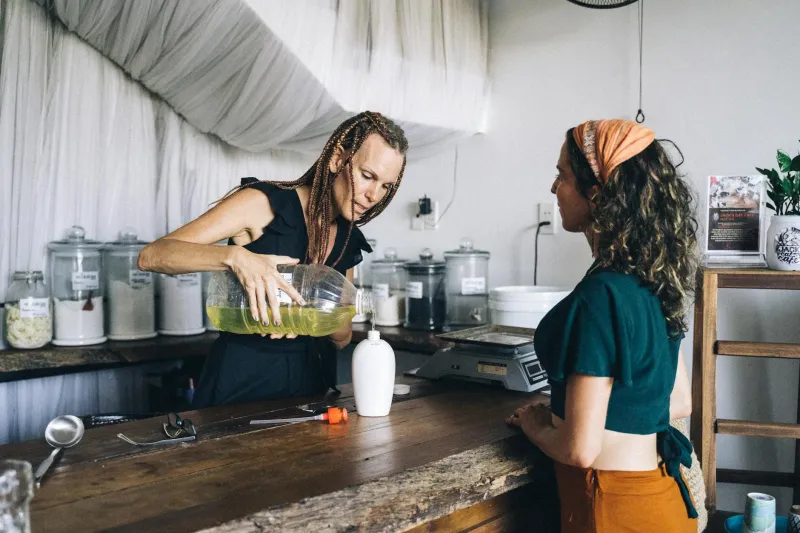
Today's refill movement draws inspiration from Britain's circular heritage whilst adapting to contemporary retail realities. Zero-waste shops across the UK demonstrate how traditional bulk dispensing can serve modern consumers seeking plastic-free alternatives. These establishments combine nostalgic refill principles with contemporary product ranges that extend far beyond basic groceries.
Earth.Food.Love in Brighton exemplifies this evolution, offering everything from household cleaning products to cosmetics through refillable dispensers. Customers bring containers or purchase reusable alternatives, creating shopping experiences that echo Britain's pre-plastic era whilst addressing current environmental concerns.
Similar initiatives flourish throughout Britain's urban centres. The Refill Coalition connects independent retailers with consumers seeking packaging-free shopping options. Their network spans England, Scotland, Wales, and Northern Ireland, demonstrating how grassroots movements can scale whilst maintaining local character.
Council Leadership and Community Response
Local authorities increasingly recognise refill systems as practical solutions to mounting waste management costs. Frome Town Council pioneered municipal refill initiatives that provide residents with convenient alternatives to packaged goods. Their success inspired similar programmes across Somerset and beyond.
Peterborough City Council's refill scheme demonstrates how public sector leadership can accelerate adoption of circular practices. By partnering with local businesses to create refill stations throughout the city centre, they've made plastic-free shopping accessible to residents regardless of economic circumstances.
These council-backed initiatives succeed because they address practical barriers that limit refill adoption. Convenient locations, standardised systems, and community education programmes help consumers navigate the transition from single-use packaging to reusable alternatives.
Technology Meets Tradition
Contemporary refill systems benefit from technological innovations that enhance the traditional British circular model. Mobile applications help consumers locate refill stations and track environmental impact. Automated dispensing systems ensure hygiene standards whilst maintaining the bulk purchasing principles that once defined British commerce.
Loop, the global reusable packaging platform, has established UK operations that combine traditional milkman logistics with modern e-commerce convenience. Customers receive products in durable containers that Loop collects, cleans, and refills – essentially recreating the milk round model for contemporary retail categories.
These hybrid approaches demonstrate how Britain's circular heritage can inform modern solutions without requiring complete abandonment of contemporary convenience. The challenge lies in scaling these innovations sufficiently to challenge dominant single-use systems.
Cultural Shifts and Future Potential
Britain's refill revival requires more than infrastructure development – it demands cultural change that reconnects consumers with circular principles their grandparents understood intuitively. This involves rediscovering the satisfaction of container preservation, the community connections fostered by local refill networks, and the economic benefits of systems that eliminate packaging waste.
Educational initiatives play crucial roles in this cultural transformation. Schools across Britain now incorporate circular economy principles into environmental education programmes, helping young people understand how their ancestors managed resources sustainably. These efforts create foundation knowledge that supports long-term adoption of refill practices.
The economic case for circular systems grows stronger as waste disposal costs increase and environmental regulations tighten. Businesses that embrace refill models position themselves advantageously for a future where single-use packaging faces mounting restrictions and consumer resistance.
Reclaiming Our Circular Heritage
Britain's plastic crisis represents departure from sustainable practices that once defined our national character. The refill revolution emerging across the UK offers opportunities to reconnect with circular principles whilst addressing contemporary environmental challenges. Success requires combining traditional wisdom with modern innovation, creating systems that serve current needs whilst honouring our sustainable heritage.
The milk bottle's return to British doorsteps – now joined by refillable containers for countless other products – signals more than environmental progress. It represents cultural renewal that could transform how Britain approaches consumption, waste, and community responsibility. Our circular past illuminates pathways towards a sustainable future that previous generations would recognise and applaud.