Silent Contamination: Britain's Farmlands Harbour a Plastic Crisis Hidden From Public View
The Invisible Invasion Beneath Our Feet
Whilst politicians pontificate about carrier bag charges and coffee cup levies, Britain's agricultural heartlands are quietly becoming repositories for one of the most insidious forms of plastic contamination imaginable. Across the verdant fields of Somerset, the rolling hills of Yorkshire, and the fertile plains of East Anglia, farmers are unwittingly orchestrating an environmental disaster that threatens the very foundations of our food security.
The statistics are staggering. British agriculture consumes approximately 135,000 tonnes of plastic annually, yet this figure barely registers in governmental plastic reduction strategies. Silage wrap, polytunnels, irrigation pipes, and chemical containers create a vast network of synthetic materials that, once degraded, fragment into microplastics that permeate every aspect of our rural ecosystem.
Westminster's Agricultural Blind Spot
The Department for Environment, Food and Rural Affairs (DEFRA) has consistently demonstrated a bewildering reluctance to confront agricultural plastic waste with the same vigour applied to consumer packaging. Whilst supermarkets face mounting pressure to eliminate unnecessary plastic wrapping, the agricultural sector operates within a regulatory vacuum that permits virtually unlimited plastic deployment across Britain's countryside.
This selective enforcement reveals the hollow nature of governmental environmental commitments. Ministers celebrate marginal reductions in household plastic consumption whilst ignoring the systematic contamination occurring in the very landscapes that define Britain's national identity. The hypocrisy is particularly galling given agriculture's fundamental role in producing the food that sustains our population.
The Microplastic Migration Crisis
Recent soil analysis conducted across British farmlands reveals microplastic concentrations that would trigger immediate intervention in any urban environment. These synthetic fragments, invisible to the naked eye, are systematically absorbed by crops, transported through root systems, and ultimately deposited onto British dinner tables.
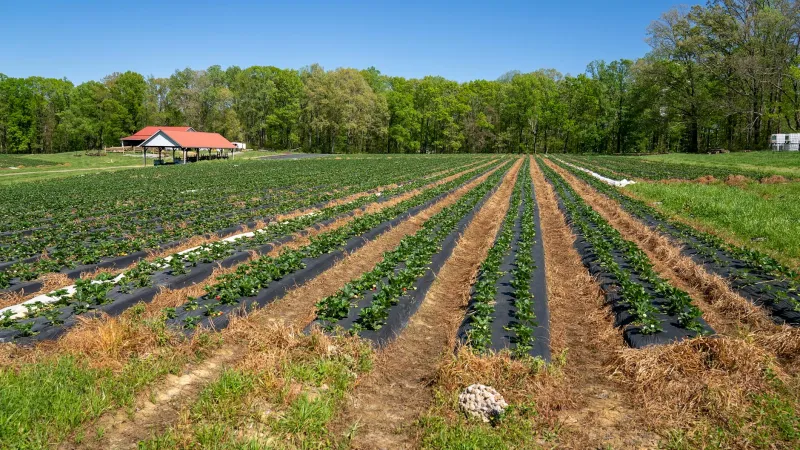
The contamination pathway is devastatingly simple. Plastic mulch films, designed to enhance crop yields and suppress weeds, gradually degrade under ultraviolet exposure and mechanical stress. Rather than biodegrading harmlessly, these materials fragment into countless microscopic particles that integrate permanently into soil structures. Once embedded, these contaminants become virtually impossible to extract, creating a legacy of pollution that will persist for generations.
Industry Inertia and False Economics
Britain's agricultural establishment has embraced plastic dependency with an enthusiasm that borders on recklessness. Trade associations consistently argue that plastic alternatives remain economically unviable, conveniently ignoring the long-term environmental costs of current practices. This short-sighted approach prioritises immediate profit margins over sustainable land stewardship, betraying the conservation principles that once defined British farming culture.
The National Farmers' Union's tepid response to plastic contamination concerns exemplifies this institutional complacency. Rather than leading innovation towards biodegradable alternatives, the organisation perpetuates a culture of environmental denial that undermines public trust in agricultural sustainability claims.
Biodegradable Solutions: Innovation Stifled by Complacency
Contrary to industry assertions, viable alternatives to conventional agricultural plastics already exist. Biodegradable mulch films manufactured from plant-based polymers offer comparable performance characteristics whilst eliminating long-term contamination risks. European competitors have successfully integrated these materials into mainstream farming operations, demonstrating that transition barriers are primarily psychological rather than technical.
British innovation in this sector remains disappointingly limited, reflecting the agricultural establishment's resistance to environmental modernisation. Government research funding continues prioritising yield maximisation over sustainability integration, perpetuating a technological paradigm that treats environmental protection as an optional consideration rather than a fundamental requirement.
The Regulatory Vacuum
Perhaps most damning is the absence of meaningful regulation governing agricultural plastic deployment. Whilst consumers face increasingly stringent restrictions on plastic consumption, farmers operate within a regulatory framework that essentially permits unlimited environmental contamination. This double standard exposes the superficial nature of Britain's plastic reduction commitments.
The Environment Agency's monitoring protocols systematically exclude agricultural plastic waste from contamination assessments, creating artificial data gaps that obscure the true extent of countryside pollution. This deliberate oversight enables continued regulatory inaction whilst providing politicians with plausible deniability regarding environmental degradation occurring beyond urban boundaries.
Demanding Accountability from Field to Fork
Britain's agricultural sector cannot continue operating as though environmental consequences are someone else's responsibility. The plastic promises made by successive governments ring hollow when the nation's most fundamental industry remains exempt from meaningful sustainability requirements.
Consumers deserve transparency regarding the contamination levels present in British-grown produce. Supermarkets that trumpet environmental credentials whilst sourcing from plastic-contaminated farms engage in precisely the greenwashing that undermines genuine sustainability progress.
The Path Forward: Regulation, Innovation, and Responsibility
Addressing agricultural plastic contamination requires immediate governmental intervention through comprehensive regulation, substantial research investment, and farmer support programmes facilitating transition to sustainable alternatives. The current trajectory of environmental neglect threatens not only Britain's ecological heritage but also the long-term viability of domestic food production.
The time for voluntary compliance has expired. Britain's agricultural sector must be held to the same environmental standards applied to every other industry, with meaningful penalties for non-compliance and incentives for innovative sustainability adoption.
Our countryside's plastic contamination represents more than environmental degradation—it constitutes a betrayal of the stewardship principles that should define British agriculture. Until Westminster acknowledges this crisis with appropriate urgency, the plastic promises made to British consumers remain fundamentally compromised by the hidden contamination flourishing in our most treasured landscapes.