Packed with Problems: The Daily Disaster of Britain's School Food Packaging Crisis
The Lunchtime Legacy
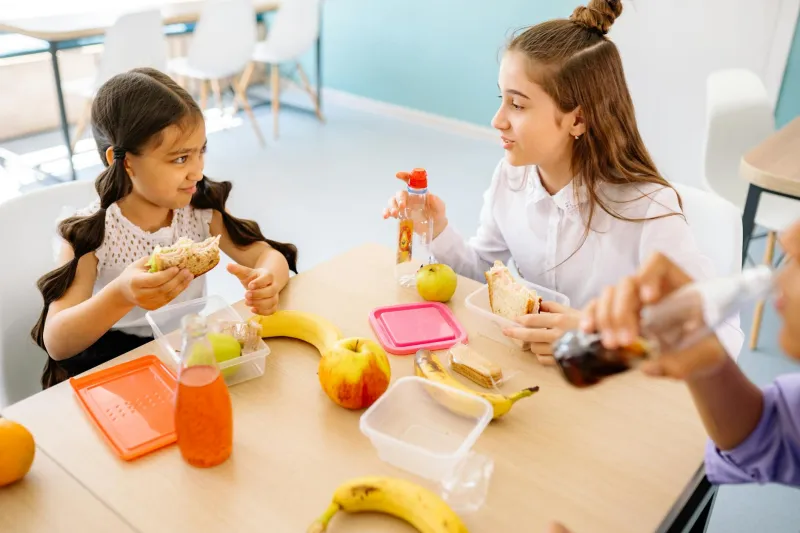
At 12:30 PM across Britain, a daily environmental catastrophe unfolds in school dining halls and playgrounds. As 8.7 million children unwrap their lunches, they collectively generate approximately 650 tonnes of plastic packaging waste – every single school day. This staggering figure, equivalent to the weight of four blue whales, represents one of Britain's most overlooked sources of plastic pollution.
The scale becomes even more disturbing when calculated annually. British schools generate approximately 117,000 tonnes of plastic waste from food packaging alone, yet this environmental disaster remains invisible to policymakers, parents, and the food industry executives who profit from it.
Manufacturing Manipulation
Britain's food manufacturers have systematically engineered a lunchbox culture dependent on single-use packaging. Companies such as Dairylea, Babybel, and Fruit Shoot have transformed children's meals into plastic-intensive consumption experiences that prioritise convenience over environmental responsibility.
The manipulation begins in supermarket aisles, where 'lunchbox-friendly' sections promote heavily packaged products specifically targeting time-pressed parents. These displays, found in every major retailer from Tesco to Waitrose, present plastic-wrapped items as solutions to modern parenting challenges whilst concealing their environmental consequences.
Pepperami, owned by Unilever, markets individual plastic-wrapped sausages specifically for children's packed lunches. Each serving generates 8 grams of non-recyclable packaging for 25 grams of product – a packaging-to-product ratio that would be considered scandalous in any other context.
Similarly, Innocent Smoothies promotes individual plastic bottles for children despite the company's supposed environmental credentials. Their 'Big Drinks for Little People' range generates 2.3 million plastic bottles annually for the school market alone, contradicting the brand's sustainability messaging.
The Cling Film Catastrophe
Beyond manufactured products, British families wrap an estimated 45 million sandwiches daily in cling film for school consumption. This practice, encouraged by food safety guidance that prioritises hygiene over environmental impact, generates approximately 8,100 tonnes of plastic waste annually from sandwich wrapping alone.
The Department for Education's school food standards make no reference to packaging sustainability, instead focusing exclusively on nutritional content. This regulatory oversight allows plastic consumption to escalate unchecked whilst schools receive guidance on every other aspect of children's dietary welfare.
 Photo: Department for Education, via elpida-varna.bg
Parents, bombarded with conflicting messages about food safety and convenience, default to single-use solutions that previous generations managed without. The normalisation of disposable packaging has created a generation that considers plastic-wrapped food the standard rather than an environmental aberration.
School Meal Schemes
Britain's school meal programmes, serving approximately 2.3 million children daily, represent an equally problematic source of plastic waste. Local authorities and catering companies prioritise cost reduction over environmental responsibility, implementing packaging-intensive systems that contradict educational sustainability messaging.
Chartwells, Britain's largest school catering provider, serves meals in disposable plastic containers across thousands of schools. Their 'grab and go' systems, promoted as efficient solutions for busy school schedules, generate enormous waste volumes that receive no regulatory oversight.
Compass Group, operating under various brands including Chartwells and ESS, has failed to implement meaningful packaging reduction strategies despite serving 1.8 million school meals weekly. The company's sustainability reports focus on food waste whilst ignoring the plastic packaging that accompanies every meal.
Local authority catering services demonstrate similar indifference to packaging sustainability. Birmingham City Council's school meal service generates approximately 180 tonnes of plastic packaging waste annually, yet environmental impact receives no consideration in procurement decisions.
 Photo: Birmingham City Council, via perfumes-arabes.mx
Corporate Targeting Strategies
Food manufacturers have identified school-age children as particularly valuable consumers, developing products specifically designed to create lifelong purchasing habits. These strategies deliberately utilise plastic packaging as a differentiation tool, creating perceived value through elaborate wrapping and portion control.
Mondelez International promotes individually wrapped Oreo biscuits for lunchboxes, generating 15 times more packaging waste per biscuit compared to standard multipacks. The company's marketing explicitly targets 'lunchbox occasions', demonstrating calculated exploitation of parental convenience concerns.
Nestlé's KitKat Chunky Lunchbox range wraps individual chocolate bars in additional plastic sleeves beyond standard packaging, creating entirely unnecessary waste for marginal marketing advantage. These products command premium prices partly justified by elaborate packaging that serves no functional purpose.
Regulatory Abdication
The Department for Education's school food standards, updated regularly to reflect nutritional science, contain no provisions addressing packaging sustainability. This glaring omission allows plastic consumption to escalate whilst schools receive detailed guidance on salt content, sugar levels, and portion sizes.
Ofsted inspections evaluate schools' environmental education programmes whilst ignoring the plastic waste generated by their own food systems. This contradiction undermines educational messaging about environmental responsibility and demonstrates institutional hypocrisy that children inevitably recognise.
Local authorities responsible for waste collection and disposal costs bear the financial burden of school packaging waste without possessing authority to influence procurement decisions that generate it. This regulatory fragmentation prevents systematic solutions whilst costs accumulate across multiple budgets.
The Innovation Imperative
Several pioneering companies demonstrate that plastic-free school food solutions are entirely feasible. Tiffin Box Company provides stainless steel containers for packed lunches, whilst Bee's Wrap offers reusable food wrapping made from organic cotton and beeswax.
 Photo: Tiffin Box Company, via people.com
These alternatives remain niche products due to higher upfront costs and established consumer habits that prioritise convenience. Without regulatory intervention or corporate responsibility initiatives, sustainable options cannot compete with subsidised plastic packaging systems.
Quantifying the Crisis
Daily plastic waste from British school food consumption includes:
- 45 million cling film wrappings
- 12 million individual snack packets
- 8 million drink containers
- 4 million yoghurt pots
- 2 million sandwich bags
This represents 650 tonnes of plastic waste every school day, accumulating to 117,000 tonnes annually. The environmental cost of this consumption pattern will persist for decades after today's schoolchildren reach adulthood.
The Path to Reform
Transforming Britain's school food packaging culture requires coordinated action across multiple sectors. The Department for Education must integrate packaging sustainability into school food standards, whilst local authorities should implement procurement policies prioritising environmental responsibility.
Food manufacturers must abandon manipulative marketing targeting children with unnecessary packaging, instead developing genuinely sustainable alternatives that protect both health and environment. Parents require education and support to adopt plastic-free lunchbox practices that previous generations considered normal.
Most critically, Britain's schools must align their environmental education programmes with their operational practices, demonstrating the sustainability values they claim to teach. Children deserve educational environments that prepare them for a plastic-free future rather than conditioning them for environmental destruction.