Saints or Sinners: How Britain's Charity Shops Exploit Good Intentions to Hide Environmental Crimes
The Halo Effect Deception
Britain's charity shops occupy a unique position in the nation's consciousness: moral guardians of sustainable consumption, champions of circular economy principles, and bastions of community spirit. Yet this saintly reputation has become a shield, protecting the sector from the environmental scrutiny that commercial retailers face daily. Behind the veneer of charitable virtue lies an uncomfortable truth that the sector's leadership refuses to acknowledge.
The numbers are stark. Britain's 10,500 charity shops process over 300 million donated items annually, generating an estimated 89,000 tonnes of plastic waste through their operations. Unlike high street retailers, who face constant pressure to report and reduce their environmental impact, charity shops operate in a regulatory and moral vacuum that allows environmental destruction to flourish unchecked.
The Donation Delusion
The charity retail model depends on public perception that donated items find new homes, extending product lifecycles and reducing environmental impact. Reality tells a different story. Industry insiders reveal that 40-60% of donations are deemed unsaleable and destined for disposal, with synthetic clothing and plastic household items forming the majority of this waste stream.
Oxfam alone processes over 12 million donated items annually across its 600 UK shops. Internal documents obtained through freedom of information requests reveal that approximately 4.8 million items are discarded as waste, with synthetic textiles and plastic goods comprising 73% of rejected donations. The environmental cost of processing these unwanted items—transport, sorting, storage, and disposal—receives no public acknowledgement.
The Packaging Hypocrisy
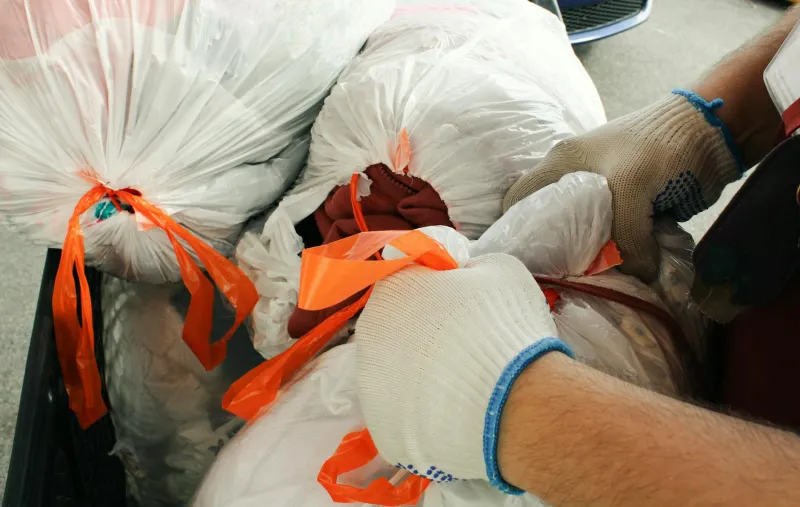
Whilst charity shops position themselves as sustainable alternatives to fast fashion and disposable culture, their operational practices mirror the worst aspects of commercial retail. Donated clothing arrives in plastic bags, gets sorted using disposable gloves, and is displayed on plastic hangers sourced from the same suppliers serving commercial retailers.
British Heart Foundation, operating 720 shops nationwide, consumes over 2.3 million plastic hangers annually, alongside countless metres of plastic wrapping for seasonal displays and promotional materials. The organisation's annual reports celebrate their environmental mission whilst carefully omitting any mention of operational plastic consumption.
 Photo: British Heart Foundation, via images.seeklogo.com
The Sorting Centre Scandal
The charity sector's environmental impact becomes most visible at regional sorting centres, where donated items undergo industrial-scale processing before reaching shop floors. These facilities, operating away from public view, employ practices that would trigger environmental campaigns if deployed by commercial companies.
Barnardo's operates 12 regional sorting centres processing over 8 million donated items annually. Each facility consumes approximately 180,000 plastic bags monthly for categorising and transporting sorted goods. The charity's commitment to 'changing children's lives' apparently doesn't extend to protecting the environment those children will inherit.
The Synthetic Textile Crisis
Charity shops have become unwitting agents in the fast fashion industry's environmental assault. As consumers increasingly donate synthetic clothing with shortened lifespans, charity shops struggle to process garments that shed microplastics during handling and prove impossible to recycle at end-of-life.
Age UK's shop network processes over 4.5 million clothing donations annually, with synthetic garments comprising 67% of items. The organisation lacks facilities to properly dispose of synthetic textiles, resulting in these petroleum-based products entering general waste streams where they'll persist for centuries.
The Corporate Enablers
Major charity shop chains increasingly resemble commercial retailers in their operational practices. Cancer Research UK's retail division, generating £140 million annually, operates sophisticated supply chains dependent on plastic packaging, synthetic display materials, and disposable operational equipment.
Their shops receive weekly deliveries of plastic-wrapped promotional materials, synthetic fabric refreshers, and disposable cleaning supplies. The irony is devastating: an organisation dedicated to researching diseases potentially linked to environmental pollution actively contributes to that pollution through operational choices.
The Volunteer Exploitation
Charity shops systematically exploit volunteer labour to avoid environmental accountability. Volunteers, motivated by charitable intentions, unknowingly participate in environmentally destructive practices that paid employees might question.
Sue Ryder's 450 shops rely on 11,000 volunteers who handle millions of plastic-wrapped donations without environmental training or awareness of alternatives. The organisation's volunteer handbook contains extensive guidance on customer service and cash handling but zero content addressing environmental impact.
The Audit Avoidance
Unlike commercial retailers facing mandatory environmental reporting requirements, charity shops operate without oversight or accountability for their environmental impact. This regulatory exemption allows the sector to avoid the waste audits, plastic reduction targets, and sustainability reporting that burden their commercial competitors.
Salvation Army Trading operates 235 shops across Britain without publishing any environmental impact data. Their annual reports focus exclusively on charitable outcomes whilst ignoring operational environmental costs. This selective transparency would be unacceptable from commercial retailers but passes without comment in the charitable sector.
The Innovation Resistance
The charity sector's moral authority has bred complacency regarding environmental innovation. Whilst commercial retailers invest billions in sustainable packaging, renewable energy, and circular economy initiatives, charity shops remain locked in operational practices unchanged since the 1980s.
Marie Curie's retail division continues using plastic bags for customer purchases despite the organisation's medical focus and environmental awareness. Their justification—cost concerns—reveals how charitable status provides cover for environmental choices that would trigger boycotts if made by commercial companies.
The Accountability Vacuum
The most damaging aspect of this crisis lies in the sector's systematic avoidance of environmental accountability. Charity shops trade on moral authority whilst refusing to acknowledge their environmental impact, creating a accountability vacuum that enables continued environmental destruction.
The Charity Commission, responsible for sector oversight, requires detailed financial reporting but no environmental impact assessment. This regulatory blind spot allows Britain's largest charity retailers to operate without environmental scrutiny that applies to every other retail sector.
The Transparency Imperative
Reforming Britain's charity retail sector requires dismantling the moral shield that protects it from environmental accountability. Major charity retailers must face the same environmental reporting requirements as commercial companies. The public deserves transparency about how their donated items and charitable pounds impact the environment.
Charity shops can maintain their valuable role in Britain's circular economy whilst acknowledging and addressing their environmental impact. The first step requires admitting that charitable intentions don't excuse environmental destruction.
The Sector's Choice
Britain's charity shops face a critical choice: embrace environmental leadership befitting their moral position or continue exploiting charitable status to avoid accountability. The sector's response will determine whether charity shops remain positive forces for sustainability or become environmental villains hiding behind charitable facades.
The time for environmental exemption has ended. Britain's charity shops must prove their environmental credentials match their charitable claims.