Hooked on Hypocrisy: The Angling Industry's Environmental Double Standards
Casting Shadows on Conservation Claims
The irony cuts deeper than any fishing hook. Along Britain's riverbanks and lakeshores, where over one million licensed anglers pursue their passion for the sport, a disturbing truth emerges from beneath the surface rhetoric of environmental stewardship. The angling industry, which has built its entire identity around protecting aquatic ecosystems and promoting sustainable outdoor recreation, operates as one of the most significant contributors to freshwater plastic pollution in the United Kingdom.
This contradiction extends from the largest tackle manufacturers down to individual fishing clubs, creating a web of environmental hypocrisy that the industry has successfully hidden behind a smokescreen of conservation marketing and heritage tourism promotion. The time has come to examine whether Britain's angling community can reconcile its environmental claims with its demonstrably destructive practices.
The Synthetic Web Strangling Our Waters
Modern angling depends entirely on synthetic materials that the industry markets as technological advances whilst ignoring their environmental consequences. Monofilament fishing line, the transparent plastic thread that forms the backbone of contemporary fishing, represents perhaps the most insidious form of aquatic pollution. Unlike the horsehair and silk lines used by previous generations, today's synthetic alternatives persist in waterways for decades, creating invisible death traps for wildlife.
The Environment Agency estimates that British anglers discard over 400 tonnes of monofilament line annually, either through accidental breakage or deliberate abandonment when lines become tangled. This plastic waste doesn't biodegrade; instead, it fragments into microplastics that enter the food chain at every level, from invertebrates to the fish that anglers claim to cherish.
Yet tackle manufacturers continue promoting ever-stronger synthetic lines as essential equipment, with no consideration for end-of-life disposal or environmental impact. Companies like Drennan International and Preston Innovations market their latest polymer innovations as conservation tools, claiming that stronger lines reduce fish mortality through quicker landing times. The environmental cost of producing and disposing of these synthetic products receives no mention in their sustainability claims.
Packaging Pollution Masquerading as Progress
The transformation of fishing tackle from durable goods to disposable commodities represents another environmental betrayal by the angling industry. Traditional tackle boxes, designed to last generations, have given way to blister-packed single-use items that generate mountains of plastic waste for minimal functional benefit.
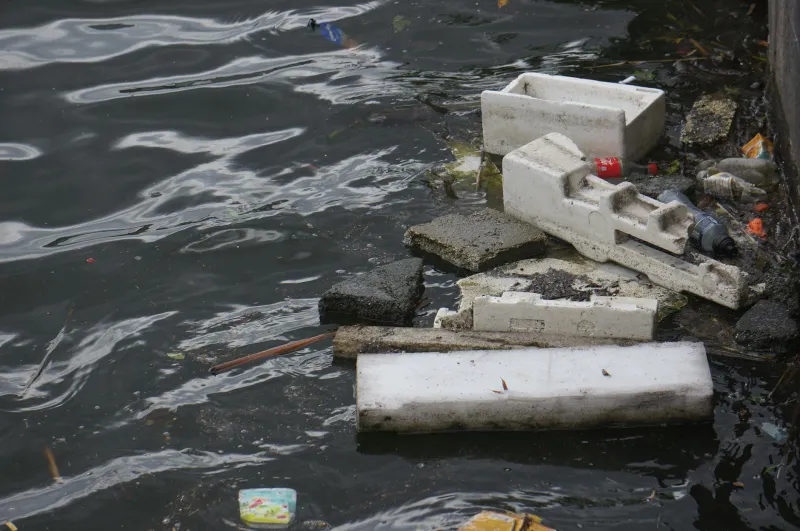
Modern bait packaging exemplifies this wasteful evolution. Live maggots, once sold in reusable wooden boxes, now arrive in polystyrene containers that crack after single use. Boilies and pellets come individually wrapped in plastic sachets, despite requiring no protection from moisture or contamination. Even fishing weights, traditionally cast from lead and used indefinitely, are now sold in plastic packaging that often weighs more than the product itself.
The Angling Trust's own research indicates that the average British angler generates 12 kilograms of tackle packaging waste annually, yet the organisation's environmental policy focuses exclusively on habitat protection whilst ignoring the plastic pollution generated by its members' purchasing habits.
Synthetic Lures: The Plastic Predators
The explosion in synthetic lure fishing has introduced entirely new categories of plastic pollution to British waterways. Soft plastic baits, designed to mimic natural prey, fragment and dissolve in water, releasing polymer particles directly into aquatic food webs. Unlike traditional metal lures that could be recovered and reused indefinitely, these synthetic alternatives are designed as consumables, with manufacturers encouraging anglers to purchase multiple colours and styles for different conditions.
Lure manufacturer Fox International promotes its range of over 200 different soft plastic designs as essential for modern angling success, with marketing materials encouraging anglers to carry extensive selections for optimal effectiveness. The company's environmental policy mentions habitat conservation but makes no reference to the plastic pollution generated by their products or packaging.
Similarly, Korda Developments markets synthetic bait products that dissolve completely in water, describing this characteristic as an environmental benefit because it leaves no visible trace. The company fails to acknowledge that dissolved plastic particles represent a more insidious form of pollution than recoverable waste, as they become permanently integrated into aquatic ecosystems.
Trade Association Accountability Vacuum
Britain's angling trade associations have systematically avoided addressing the plastic pollution generated by their industry, preferring to focus on politically safer topics like habitat restoration and species conservation. The Angling Trades Association's sustainability charter emphasises energy efficiency and carbon reduction whilst completely ignoring plastic waste, despite packaging and synthetic tackle representing the industry's most significant environmental impact.
This selective environmentalism extends to the sport's governing bodies. The Environment Agency's angling strategy promotes the sport's conservation benefits whilst remaining silent about plastic pollution from tackle and packaging. Angling clubs receive guidance on habitat management and fish welfare but no information about reducing plastic waste or implementing sustainable tackle policies.
When challenged directly about plastic pollution, industry representatives consistently deflect responsibility to individual anglers or claim that environmental regulations prevent them from developing sustainable alternatives. However, European examples demonstrate that these claims represent convenient excuses rather than genuine constraints.
Continental Contrasts Expose British Failures
German angling associations have implemented comprehensive plastic reduction programmes that directly contradict British industry claims about regulatory barriers. Tackle manufacturers like Balzer and DAM offer refillable bait containers and biodegradable soft lures that meet identical performance standards to their plastic equivalents.
French fishing clubs operate tackle sharing schemes that reduce individual plastic consumption whilst building community connections. Synthetic lures are treated as club assets rather than personal consumables, dramatically reducing packaging waste whilst maintaining access to diverse tackle options.
Dutch angling venues have pioneered line recycling programmes that collect discarded monofilament for conversion into new fishing products. These initiatives demonstrate that environmental responsibility can enhance rather than compromise angling experiences, exposing the poverty of British industry excuses.
Demanding Real Environmental Leadership
Transforming Britain's angling industry requires acknowledging that environmental stewardship cannot be separated from tackle choices and purchasing decisions. Anglers who claim to love Britain's waterways must confront the contradiction between their conservation rhetoric and their plastic consumption patterns.
Tackle manufacturers need binding environmental standards that address product design, packaging waste, and end-of-life disposal. Marketing claims about conservation and sustainability should be supported by measurable plastic reduction targets and transparent reporting on environmental impact.
Angling clubs and associations must extend their environmental policies beyond habitat management to include tackle sustainability and waste reduction. Venue operators should implement plastic-free policies that encourage traditional tackle materials and discourage disposable alternatives.
The Catch-22 of Angling's Future
Britain's angling community faces a fundamental choice: continue hiding behind hollow conservation rhetoric whilst contributing to aquatic plastic pollution, or embrace genuine environmental leadership that aligns practices with principles. The industry's current trajectory—promoting environmental stewardship whilst depending on plastic tackle and packaging—represents an unsustainable contradiction that undermines its credibility and threatens the ecosystems it claims to protect.
The million-plus anglers who pursue their passion across Britain's waters deserve an industry that matches its environmental claims with concrete action. Until tackle manufacturers, trade associations, and governing bodies confront their plastic dependency directly, every cast into Britain's waterways carries the weight of environmental hypocrisy.
The angling industry has positioned itself as the guardian of Britain's aquatic heritage. It's time to prove whether that guardianship extends to protecting waterways from the plastic pollution the industry itself generates.