Fresh Faced Deception: Britain's Health Food Chains Bury Environmental Costs in Plastic Packaging
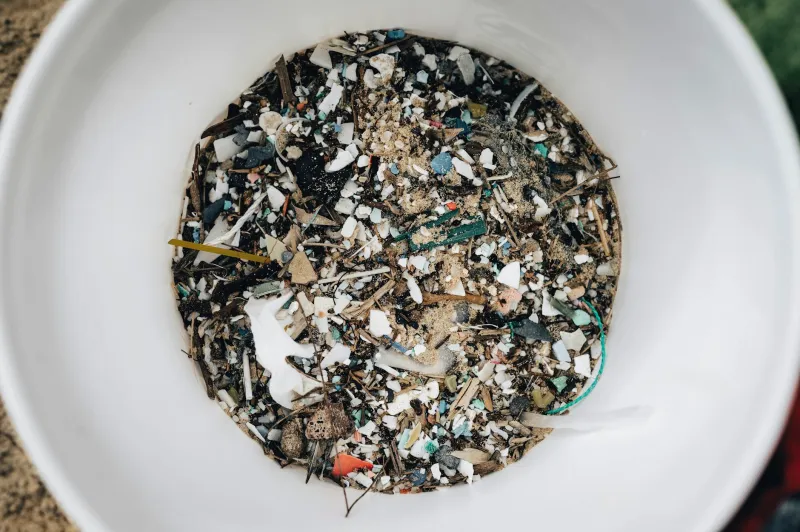
Fresh Faced Deception: Britain's Health Food Chains Bury Environmental Costs in Plastic Packaging
Across Britain's high streets, a quiet revolution appears to be taking place. Where once greasy spoons and chip shops dominated the quick-service landscape, gleaming salad bars and grain bowl counters now beckon health-conscious consumers with promises of nutritious, sustainable eating. Yet beneath the carefully curated Instagram aesthetics and earnest messaging about 'clean living' lies an uncomfortable truth: Britain's healthy food sector has built its rapid expansion on foundations of single-use plastic that would make a fast-food giant blush.
The Plastic Paradise Behind the Green Marketing
Walk into any branch of Tossed, Farmer J, or the countless independent 'fresh food' counters that have proliferated across London's financial district and beyond, and you'll witness a masterclass in environmental cognitive dissonance. Customers queue eagerly for quinoa salads and superfood smoothie bowls, served exclusively in rigid plastic tubs that bear no resemblance to the recyclable packaging their branding suggests.
Industry insiders reveal that the standard 500ml salad container used across the sector—typically made from polypropylene or PET plastic—cannot be processed through Britain's kerbside recycling systems when contaminated with food residue. The accompanying plastic lids, often a different polymer entirely, face even grimmer prospects in our waste stream.
"The economics are brutal," confides a former operations manager at a major healthy food chain, speaking on condition of anonymity. "Compostable alternatives cost three to four times more than standard plastic containers, and they compromise shelf life. When you're operating on razor-thin margins and promising investors aggressive expansion, environmental concerns become secondary considerations."
Procurement Practices That Prioritise Profit Over Planet
A Plastic Promises investigation into supplier contracts reveals the systematic nature of the sector's environmental shortcomings. Major healthy food retailers negotiate volume discounts with packaging suppliers based on standardised plastic formats, locking themselves into long-term agreements that make sustainable alternatives economically prohibitive.
One leaked procurement document from a prominent salad chain shows annual orders exceeding 2.3 million plastic containers and lids—enough to create a tower stretching from London to Birmingham if stacked. The contract includes penalty clauses for switching suppliers mid-term, effectively cementing plastic dependency regardless of environmental developments.
Meanwhile, marketing budgets allocated to promoting 'sustainable sourcing' and 'eco-conscious values' dwarf actual expenditure on packaging innovation. Financial filings show that several major players spend more on social media advertising about their environmental commitments than on researching alternatives to plastic packaging.
The Regulatory Blind Spot
Britain's healthy food sector has flourished in a regulatory environment that treats packaging responsibility as someone else's problem. Unlike major supermarket chains, which face increasing scrutiny over plastic reduction targets, smaller food service operators slip through gaps in extended producer responsibility legislation.
The Department for Environment, Food and Rural Affairs (DEFRA) acknowledges that food service packaging represents a significant and growing waste stream, yet current regulations focus primarily on retail rather than hospitality sectors. This leaves thousands of salad bars, juice counters, and healthy eating establishments free to generate plastic waste without meaningful oversight or reduction targets.
Environmental lawyer Sarah Mitchell explains: "The regulatory framework assumes that food service packaging will be managed by local authorities through general waste collection, but this ignores the reality that contaminated food containers are largely unrecyclable. We're creating a system where businesses can externalise their environmental costs onto taxpayers and future generations."
Innovation Stifled by Short-Term Thinking
Despite the sector's claims to champion wellness and sustainability, investment in packaging innovation remains minimal. Several promising British startups developing compostable food containers report struggling to secure pilot programmes with major healthy food chains, despite offering comparable performance at only marginally higher costs.
Seaweed-based packaging manufacturer Notpla approached multiple salad chains with proposals for biodegradable containers that break down within weeks rather than centuries. Company founder Rodrigo Garcia Gonzalez describes the response as "polite interest followed by commercial inaction."
"These companies want to be seen as environmentally progressive, but they're not willing to accept even small margin impacts to achieve genuine sustainability," Garcia Gonzalez explains. "It's easier to buy carbon offsets and print green messaging on plastic packaging than to fundamentally rethink their operational model."
Consumer Complicity in Corporate Greenwashing
The healthy food sector's plastic dependency persists partly because consumers prioritise convenience over environmental consistency. Market research suggests that while 73% of health-conscious consumers claim to value sustainable packaging, only 12% actively seek out businesses offering genuinely eco-friendly alternatives.
This disconnect enables companies to maintain environmentally destructive practices while projecting green credentials through carefully crafted marketing messages. Social media feeds overflow with images of colourful salads in plastic containers, hashtagged with environmental slogans that bear no relationship to the packaging's actual lifecycle.
The Path Forward: Accountability Through Transparency
Britain's healthy food sector stands at a crossroads. Continued expansion built on single-use plastic foundations will generate waste streams that overwhelm our already strained recycling infrastructure, while genuine commitment to sustainability could position these businesses as leaders in circular economy innovation.
The solution requires immediate regulatory intervention to close loopholes that exempt food service operators from packaging responsibility. Extended producer responsibility must encompass the entire supply chain, from ingredient sourcing to end-of-life disposal, with meaningful penalties for businesses that externalise environmental costs.
Consumers, too, must demand consistency between the values these businesses espouse and the practices they implement. Until market forces align with environmental imperatives, Britain's healthy food sector will continue serving up a daily portion of plastic pollution alongside every superfood salad.
The time for fresh-faced deception has ended. Britain deserves a food sector that nourishes both bodies and the planet—not one that wraps environmental destruction in wholesome marketing and expects consumers to swallow the contradictions.