Degrees of Denial: The Plastic Hypocrisy Embedded in Britain's University Campuses
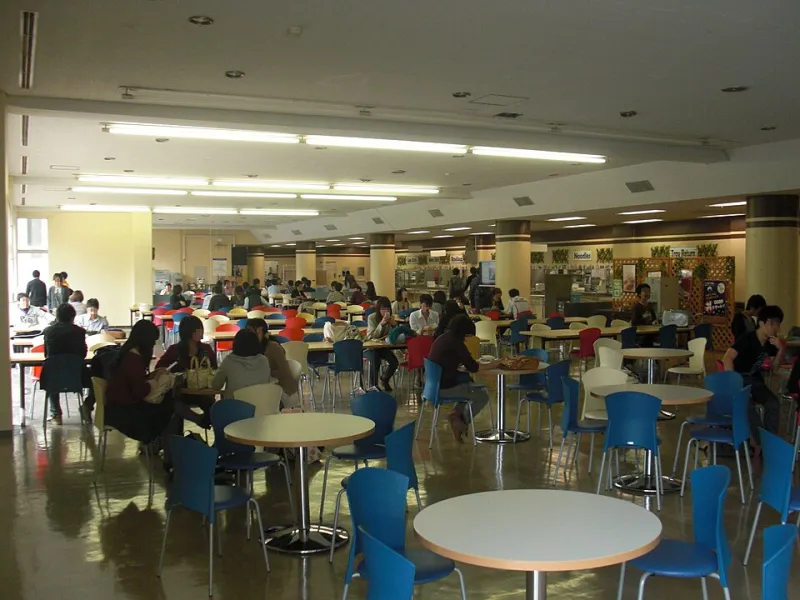
Photo: Miyuki Meinaka, CC BY-SA 3.0, via Wikimedia Commons
Degrees of Denial: The Plastic Hypocrisy Embedded in Britain's University Campuses
There is a particular kind of institutional hypocrisy that is all the more corrosive for being well-intentioned. Britain's universities have, over the past decade, invested considerable effort in presenting themselves as champions of the sustainability agenda. Environmental science departments publish peer-reviewed research on plastic pollution. Geography faculties run fieldwork programmes documenting microplastic contamination in British waterways. Business schools teach modules on circular economy principles and corporate environmental responsibility. Vice-chancellors sign open letters calling for urgent government action on the climate crisis.
And then the lunch queue opens in the student union, and two thousand students collect their meal deals in single-use plastic containers, with plastic cutlery, in plastic bags, accompanied by plastic-lidded drinks, and deposit the entire assembly into bins that may or may not be sorted effectively before reaching a landfill site somewhere in the English Midlands.
 Photo: English Midlands, via upload.wikimedia.org
This is not a peripheral inconsistency. It is a structural contradiction that sits at the heart of how British higher education currently operates, and it deserves the unambiguous scrutiny that Plastic Promises applies to every sector that substitutes rhetoric for responsibility.
The Scale of the Problem
With approximately 2.3 million students enrolled across UK higher education institutions, and hundreds of thousands of staff occupying campuses that function, in many cases, as self-contained towns, the plastic footprint of Britain's university sector is substantial by any measure. The University of Leeds, to cite one institution that has at least attempted to quantify its own impact, estimated in a sustainability report that its campus generated tens of thousands of single-use plastic items on a daily basis prior to any intervention programme. Extrapolated across the Russell Group alone, the figures become genuinely significant.
Yet comprehensive, independently verified plastic waste data from British universities is remarkably difficult to obtain. Unlike the carbon reporting frameworks that many institutions have adopted — driven partly by the Race to Zero campaign and partly by reputational competition — plastic waste auditing remains voluntary, inconsistent, and largely self-reported. The Higher Education Statistics Agency collects extensive data on institutional finances, student outcomes, and research outputs. It does not collect systematic data on plastic waste generation. This absence is itself an institutional choice, and it is one that deserves to be named as such.
Freshers' Week: Seven Days of Disposable Welcome
If one wishes to identify the single most concentrated manifestation of campus plastic hypocrisy, freshers' week provides it annually and reliably. The events, fairs, and social gatherings that constitute a new student's introduction to university life are, in the majority of institutions, almost entirely dependent on single-use plastic infrastructure. Promotional merchandise — branded plastic bottles, lanyards made from synthetic materials, tote bags of ambiguous recyclability — is distributed in quantities that beggar belief. Catering at freshers' events routinely defaults to the cheapest available disposable option.
The student unions that organise these events are not, in the main, indifferent to environmental concerns. Many have passed motions committing to plastic reduction. Some have introduced reusable cup schemes and biodegradable catering ware for their regular bar and café operations. But the commercial pressures of freshers' week — the need to attract sponsorship, manage large crowds efficiently, and compete with rival institutions for student engagement — consistently override environmental commitments that are, in operational terms, treated as aspirational rather than binding.
Sponsorship is a particular problem. Freshers' fairs attract corporate partners whose business models are fundamentally incompatible with plastic reduction. Energy drink brands, fast food chains, and convenience food companies arrive on campus bearing promotional materials that are, by design, disposable. Universities that accept this sponsorship revenue — and the majority do — are implicitly endorsing the plastic practices of their commercial partners within the very spaces where they claim to be building a more sustainable future.
The Procurement Gap
At a systemic level, the most significant driver of campus plastic waste is not student behaviour or individual events but institutional procurement policy. The catering contracts that govern what is served in university cafeterias, coffee shops, and vending machines are typically awarded through competitive tender processes in which price and operational efficiency carry substantially more weight than environmental performance.
Third-party catering operators — including the large national contractors that hold contracts across multiple institutions simultaneously — are rarely subject to plastic reduction targets that carry meaningful consequences for non-compliance. Where environmental criteria are included in tender specifications, they are frequently framed in terms of aspirations and intentions rather than measurable commitments with defined timelines and audit mechanisms.
The result is a structural incentive to maintain the status quo. A catering contractor that invests in reusable container systems, compostable packaging, or reduced-packaging supply chains incurs additional costs that a competitor content to rely on standard single-use infrastructure does not. Without procurement frameworks that level this playing field — by making genuine plastic reduction a contractual requirement rather than a competitive differentiator — the market will continue to select for the cheaper, more plastic-intensive option.
Teaching One Thing, Doing Another
The pedagogical dimension of this problem warrants particular attention. A student enrolled in an environmental studies programme at a British university is, in the course of their studies, likely to encounter detailed academic analysis of the plastic pollution crisis, corporate greenwashing, and the gap between institutional environmental rhetoric and operational reality. They are, simultaneously, likely to purchase their lunch in a single-use plastic container from a catering outlet operating under a contract that their institution awarded without meaningful environmental conditions.
This is not merely an abstract irony. It is an active impediment to the development of the environmental consciousness that universities claim to be cultivating. When the institution itself demonstrates that sustainability commitments are performative rather than operational, it communicates a lesson — loudly and repeatedly — that contradicts everything being taught in the lecture theatre. Students are perceptive. They notice the gap. And the lesson they draw from it is not the one their institutions intend.
Conversely, universities that take their operational environmental responsibilities seriously possess an extraordinary educational asset. A campus that has genuinely eliminated single-use plastic from its catering operations, that runs a functioning reusable container deposit scheme, and that publishes transparent annual waste audits is providing its students with a living case study in institutional accountability. The pedagogical value of that demonstration is difficult to overstate.
A Manifesto for Campus Accountability
Plastic Promises calls on Britain's universities to close the gap between their stated values and their operational realities through a set of concrete, verifiable commitments. All institutions should publish independently audited annual plastic waste data, disaggregated by source — catering, events, laboratories, and administrative operations. Catering contracts should include binding plastic reduction targets with financial penalties for non-compliance and independent verification mechanisms. Freshers' week events should be subject to the same environmental standards applied to the rest of the institution's operations, with sponsorship from brands whose packaging practices are incompatible with those standards declined or conditioned on compliance.
The Universities UK sustainability framework provides a vehicle for collective action that the sector has not yet fully exploited. A sector-wide commitment to mandatory plastic auditing, developed through that framework and adopted by member institutions, would represent a meaningful step towards the accountability that universities' own research and teaching demands.
Britain's universities are, at their best, institutions of profound social importance — places where the ideas and values that will shape the next generation of public and private decision-making are formed. The plastic crisis is one of the defining environmental challenges of our time, and universities have chosen to position themselves as authorities on it. That positioning carries an obligation. It is time for Britain's campuses to honour the degree they claim to hold in environmental leadership — and to start showing their working.